Thursday, June 7, 2018

Part 1: Controversial Ideas in Evolutionary Biology

Following the Dynamic Ecology poll on Controversial Ideas in Ecology, Jeremy Fox encouraged us to run a similar poll for evolutionary biology. We started by replicating the survey procedure of the ecology poll, wherein ideas were stated in a very simple fashion, and readers were encouraged to rank the idea on a scale from 1 (definitely false) to 5 (definitely true). Respondents were encouraged to abstain from a given question if they weren’t particularly comfortable answering it. Questions were chosen from a combination of our own interests and a series of suggestions in the comments section on an earlier blog introducing the survey. Promotion of the poll was through tweets from @ecoevoevoeco (and many retweets) in which various evolution societies were tagged – and the poll was up for about 5 days.

The poll had 532 respondents, of which 38.3% self-identified as faculty, 25.2% as postdocs, 31% as graduate students, and 5.5% as “other.” Given the relative numbers of people in evolutionary biology in these different categories, and the likely age-dependence of interaction with social media, I had expected more graduate students. Perhaps some younger scientists weren’t yet as comfortable providing their opinion on these ideas. I should also note that it is possible the survey was infiltrated by non-evolutionary biologists, or even non-scientists, but – based on various comments, and the responses – I think the majority of respondents were indeed evolutionary biologists.

A description of the results of the poll will appear in several posts. The present post will summarize and describe, and try to interpret, the distributions of responses. Future posts will consider patterns in comparison to the ecology poll and my own opinion on the various "controversies."


THE CLASSICS

A series of questions addressed classic debates in evolutionary biology: punctuated equilibrium, group selection, sympatric speciation, character displacement, and reinforcement.


Punctuated equilibrium was most vocally espoused by Eldredge and Gould as an alternative to what they considered to be deterministic Darwinism. They argued that Darwin and his followers often considered evolution to be the slow, gradual accumulation of change, whereas – instead – most lineages remained phenotypically rather constant through time, except for brief periods of rapid change. They further argued that this punctuated PATTERN must reflect some non-Darwinian PROCESS, such as macromutation or species-level selection. The poll results suggest that most people were rather ambivalent about punctuated equilibrium and very few felt particularly strongly one way or the other. I speculate that the reason is that most people recognize the punctuated PATTERN of evolution, as indeed did Darwin and Simpson and many other classic evolutionary biologists; but, at the same time, they reject the need for a non-Darwinian mechanism. Of course, the question did not distinguish between these two options, but the next question allows some insight.


The statement here echoes one aspect of the punctuated equilibrium debate, where special “non-Darwinian” mechanisms were needed to explain the bursts of evolutionary change. More generally, some researchers studying macro-evolution (differences between major lineages, the origins of new traits, and so on) often assert that classic Darwinian natural selection is not sufficient to explain macroevolutionary trends. Here, however, respondents clearly felt that macro-evolution was simply micro-evolution “writ large” or perhaps, given the above responses, “writ in fits and starts.” Admittedly, the readers of this eco-evo-evo-eco blog are more likely to study micro-evolution than macro-evolution, and so we might here be seeing a bias of the community surveyed.


The idea that natural selection acts not just among individuals within groups but also among groups was roundly criticized by George Williams in his classic book, as well as by other influential evolutionary biologists. These critiques were so devasting that, basically, no one would invoke the process for decades. Recently, a number of studies have shown theoretically and empirically that the process can work, and it has been heavily promoted by David Sloan Wilson and others. It seems, however, that the group selectionists have not been very convincing.


The idea that one species can split into two or more in a single geographical location, when gene flow starts quite high, is another concept that saw devastating critiques by authority figures, most notably Ernst Mayer. In the last 20 years, however, an increasing number of both theoretical and empirical studies have revived interest in the topic. Interestingly, the modern perspective seems to have made considerable inroads, with few people strongly accepting the statement that “sympatric speciation is very rare.” At the same time, very few people felt it was definitely false. 


Two other classic debates in evolutionary biology, which also echo in ecology, relate to the importance of interactions. Character displacement is the idea that competition between species or between conspecifics for shared resources can drive evolutionary divergence in resource use and, hence, in the traits that facilitate that divergence. A series of classic papers have struggled with what, precisely, would be the evidence necessary to conclude that character displacement was occurring, sometimes generating a series of CRITERIA that "must" be met if the process is to be inferred. However, the survey suggests that few respondents strongly disagree that character displacement is an important force. I might suggest that this outcome arises because most people realize that the usual “criteria for demonstrating” cited by those classic papers place the bar too high.


Another controversy surrounding competition is the extent to which it drives speciation, specifically through reinforcement: that is, selection to avoid maladaptive hybridization (or, more narrowly, against hybrids). Reinforcement is sometimes called “reproductive character displacement”, since the mechanism is similar.  Here the literature went back and forth between supportive and dismissive theoretical analyses and empirical “demonstrations.” Respondents here seem to have much the same view as for character displacement, suggesting that competitive interactions are generally considered an important force in evolution.

THE GENETICS OF ADAPTATION


The above debates are classic ones, which might now be fading into perceived irrelevance, or perhaps are considered “solved” to some extent. However, a number of new debates have emerged on which we also surveyed opinions. We were particularly curious as to how classic assumptions of adaptation have fared in the genomics era.


R.A. Fisher famously modeled genetic evolution with his infinitesimal model, where adaptation was driven by countless numbers of genes each with infinitesimal influences, corresponding to formulations of quantitative genetics. In the modern genomics era, however, more and more studies are emphasizing particular genes (or genomic regions) determining traits involved in adaptation. The response from classic quantitative geneticists frequently has been “Sure, such genes do exist (Mendel’s peas after all!), but they represent a small fraction of overall adaptation – certainly not enough to warrant the attention currently paid to them.” The poll suggests that the majority of respondents accept the quantitative geneticists’ conjecture, or – as those geneticists might say – the quantitative geneticists’ EVIDENCE.


As opposed to the previous question, we can here see what appears to be a substantial shift in opinion from the classic interest in genetic changes occurring in protein coding sequences to genetic changes in regulatory regions. 

A rapidly expanding cadre of scientists are interested in genomic changes that do not involve changes in sequence: that is, epigenetics – most commonly DNA methylation. It has been argued by some that the study of epigenetics is revolutionizing genetics and will soon revolutionize evolutionary biology. The distribution of responses here suggest a wide range of opinion, with most not buying into the hype. However, nearly 10% of respondants agreed strongly that epigenetics is revolutionary – although perhaps they merely meant that lots of people are now studying it. Of course, empirical data on this topic is still so sparse that one might say we are all currently poorly informed on this topic.


This statement, of course, captures part of the classic critique of the “adaptationist program”, most famously voiced by Gould and Lewontin. “Adaptationism” is a paradigm in which traits are generally assumed to be adaptive, having been shaped by selection; opponents of this perspective sometimes deride the hypotheses advanced by adaptationists as “just so stories” (after Kipling’s short stories like “How the Camel Got His Hump”).  Interestingly, opinion here is bi-modal (as were responses to the original critique), with few people being indifferent. Personally, I am rather surprised that the Gould–Lewontin view still seems quite strongly accepted in the evolutionary biology community. 


The last 20 years of interest in “ecological speciation” and “adaptive speciation” seems not to have strongly swayed opinion, in the sense that many evolutionary biologists still feel that neutral processes need to be considered in speciation.

I imagine that most evolutionary biologists agree that constraints are important on both short- and long-term scales. However, by separating the two questions, I had expected to differentiate people concerned with immediate responses to selection being altered by the G-matrix from people concerned with structural and physical constraints preventing certain morphologies. Yet the response was generally the same – most people feel that constraints are important.


Given the above responses suggesting that neutral process should be considered, and that constraints are common, I was very surprised to see that respondents here went with the classic view of local adaptation being strong and deterministic (parallel). I guess a fair interpretation would be that while most respondents think that natural selection is the most important force, its influence could sometimes be modestly altered by neutral processes and constraints.

---------------------------

That's all for now. Stay tuned for more results and interpretation.


Thursday, May 31, 2018

A new challenge (or boon) for fisheries: evolution in non-target species

Fisheries harvests may drive evolution in lower, non-targeted species, and this evolution can bolster or undermine the harvested species.

Humans are good at altering ecosystems, even unintentionally. Human actions can also alter selection pressures on organisms, driving new evolution. One example of such evolution that demands urgent attention is fisheries-induced evolution, in which harvest drives trait change in fish. The details of fisheries-induced evolution are fairly straightforward: larger, bolder fish are more likely to be caught by fishing gear, leaving smaller, shier individuals behind. The result is an evolved fishery, which may interact differently with its environment and have lower long-term stability.

Harvest drives changes in fish behavior and morphology

Growing evidence for trait change in harvested species has led to calls for fishery evolutionary impact assessments, which consider the effect of harvest-induced evolution on fishery yield, sustainability, and recovery. However, little work has considered the potential for evolution in lower, non-target trophic levels to impact fisheries.

Our recent modeling experiments reveal a harvest-driven eco-evolutionary trophic cascade: Declines in harvested species can drive cascading changes down food webs, altering selection pressures on lower trophic levels. Evolution in these lower trophic levels can cause cascading changes back up the food web, ultimately altering the abundance of the harvested species.

Harvest-induced evolution in lower trophic levels predictably feeds-back to affect the harvested species.
From Wood et al 2018, Scientific Reports. Used with a CC license.

The direction and impact of evolution in lower trophic levels is predictable, according to our models. Odd numbered trophic levels (referring to position below the harvested species, e.g. secondary consumers in our table) have fewer prey and predators during harvest, and thus evolve increased competitive ability, at the cost of lower defense. These numerous, vulnerable individuals give a bottom-up boost to the food web, which can bolster the harvested species. Even numbered trophic levels (e.g. primary consumers in our table) have more predators and prey, and thus evolve increased defenses, at the cost of competitive ability. These less numerous, more defended individuals undermine the trophic levels above them, thus ultimately undercutting the harvested species. The net effect of evolution on the harvested species therefore depends on which trophic levels evolve, with potential for evolution at multiple trophic levels to be cancelling or synergistic.

Our models provide some insights on where effects of evolution in lower trophic levels might have the strongest effect on harvested species. Species with abundant variation, even tradeoffs between competition and defense, and strong interactions with predators and prey are most likely to drive the eco-evolutionary dynamics we observed. We suggest that metrics of trophic cascade strength or interaction strength are a good first clue towards finding systems where eco-evolutionary feedbacks are of particular concern.

Our model does not merely indicate another source of doom for fisheries. Indeed, it suggests that some evolution in non-target trophic levels might even help offset some more direct effects of harvest. Rather, our model highlights the importance of understanding evolution and eco-evolutionary feedbacks in communities, rather than just a single species, when approaching conservation problems. 

The major next step of this work—one which we hope will be investigated by evolutionary biologists and ecologists alike—is to collect the data necessary to detect eco-evolutionary feedbacks from non-target species. Monitoring phenotypes of lower trophic levels in harvested ecosystems, as well as mining current datasets for evidence of trait change in non-target species, are two possible ways forward. If you have any ideas, feel free to get in touch!

Making a modeler
I started my PhD at the University of Maine in fall 2015. Naively intending to immediately begin some intrepid and fulfilling experiments with mosquitofish, I quickly languished under long waits at the hands of state government, institutional animal care, and facilities. It seemed I would have an endless PhD, devoid of any fishy work.

Advisor Mike Kinnison demonstrating his fishing skills.

As a side project to preserve my dwindling patience and sanity, I began working on a short R script to model two-species eco-evolutionary dynamics. After some encouragement from my advisors Mike Kinnison and Eric Palkovacs, I expanded my model to include three, then four evolving trophic levels. Running against the limits of processing power on my laptop, I translated the entire script to Matlab (though not without several angry weekends of debugging), and used some limited funding to purchase a lab computer. Mike eventually intervened, encouraging me to channel my newfound obsession into a productive problem: fisheries induced evolution. One year, several lost weekends, and two failed attempts at beards later, we had a new theory on fisheries induced evolution and trophic cascades. And I finally started working on some real fish.

Looking for eco-evolutionary trophic cascades with Eric Palkovacs' UCSC lab.

Three years into my degree, I now have more real-world fishy data than ever needed to occupy my time. In retrospect, I think starting my degree program with some modelling was a great opportunity. It’s hard to know if I would have had the same bandwidth to launch into a similar model at this point in my program, and the models have helped me focus my field and lab work. Based on my experience, my tip to anyone contemplating some modelling as part of their dissertation is to start early when everything else is tied up in limbo. The nice thing about models is that most can be adapted as your dissertation morphs and grows.

Zach Wood is a PhD Candidate in Mike Kinnison's Evolutionary Applications Lab at the University of Maine, and definitely not a morning person.

Tuesday, May 15, 2018

Controversial Ideas in Evolutionary Biology

THE POLL IS NOW UP HERE

Jeremy Fox over at Dynamic Ecology recently conducted a poll on controversial ideas in ecology. As example, some of the most controversial ideas turned out to be:


1. Species interactions are typically stronger and more specialized in the tropics.

2. Local diversity is declining in most or all localities

3. Species’ poleward geographic range limits typically are set by abiotic factors, not species interactions.

Jeremy contacted Dan Bolnick and I and suggested the perhaps it would be interesting to do a similar poll for evolutionary biology. We agree. For starters, we would like to get your opinion from the comments section on this post to select a series of questions for use for the formal poll. As examples, I am going to here suggest a few questions of the sort and form that would work well for a survey.

1. To a first approximation, neutral processes can be ignored as an explanation for organismal trait variation.

2. To a first approximation, neutral processes can be ignored as an explanation for speciation.

3. Evolutionary constraints are a strong influence on short term evolution.

4. Evolutionary constraints are strong influence on long term evolution.

5. Gene flow generally constrains adaptive evolution.

6. Character displacement is an important force in trait evolution.

7. Reinforcement is an important force in speciation.

8. Sympatric speciation is very rare.

Please suggest some more controversial ideas in the comments below. If you are curious about the survey to come, here is some text from the Dynamic Ecology poll, modified slightly for the present context.
Scientific controversies provide a fascinating window into the collective scientific process. The cartoon idealized image of science is a rigorous process, conducted by objective individuals, that converges on the truth. Which makes it mysterious why there would ever be scientific controversies, as opposed to mere uncertainty due to lack of evidence.
But for scientific controversies to give insight into how science actually works, you have to know which scientific ideas actually are controversial, or to what extent they’re controversial. That’s not always easy to figure out, even for scientists themselves! For instance, the scientists who publish on an idea generally are only a minority of the scientists with an opinion on the idea, and not a randomly-sampled minority. So you can’t always read the literature and tell the difference between, say, an idea that splits scientific opinion down the middle, and an idea on which most scientists believe X but a vocal minority believe not-X (see here and here for discussion).

Hence this poll! It will list a number of controversial or possibly-controversial evolutionary ideas. Readers will then indicate if they think each idea is definitely false (“1”), definitely true (“5”), or somewhere in between.
Each idea will be stated briefly, without caveats or elaboration, the way it might be summarized in a textbook or in the beginning of a paper. That’s the only practical way to poll on this. Plus, arguably the reason why evolutionary ideas become both widespread and controversial is by getting stripped of details, nuance, and caveats.

Saturday, April 7, 2018

Undergrad the Impaler

Editor's note (from Dan Bolnick): The following is a reflection written by Cole Thompson, who was an undergraduate at the University of Texas at Austin and worked in my lab from 2013 until his graduation in 2015. Cole is now a PhD student at the University of Texas. From his work in my lab, he produced a first-authored paper and was a co-author on two other papers.

I arrived on the University of Texas at Austin campus in August 2011 excited by the opportunities that college would provide me. I had chosen UT largely in part because of the excellent science departments. However, as sophomore I was still looking to find my place on campus. On a cool January day walking the halls of one of the building I had class in, I found a poster searching for students interested in doing biological field work in Canada. Excitedly, I sent my resume to Dr. Dan Bolnick. He shot me back an offer to meet him and discuss the summer work—an NSF funded project on the parallel evolution of three-spine stickleback in evolutionarily independent lake-stream pairs on Vancouver Island. At the meeting he offered me the summer position and I accepted, unaware of how great of an impact this would have on my life. 
As I learned later during my time in the lab and undergraduate studies, Vancouver Island is an ideal location for examining how parallel evolution has occurred. As most readers of this blog will know, stickleback colonized lakes and streams on Vancouver Island about ~12,000 years ago after the last ice age. The result is many replicate pairs of neighboring lake and stream populations.
Finally, the spring semester ended and we were slated for a May 21, 2013 departure, but I excitedly and mistakenly arrived for departure a day early. The next morning, arriving at the correct time I met Dr. Yoel Stuart, the postdoc running the parallel evolution project, as well as Dr. Travis Ingram, another post-doctoral researcher conducting field work on the assortative mating of stickleback on Vancouver Island. Our trip began with a four day drive from Texas to British Columbia, which showed the beautiful side of the western US, and as we approached British Columbia I disconnected from the grid and my excitement for the summer grew. Once we arrived at our cabin on Roberts Lake, the real work began--sorting through fish traps, labeling tubes for storage of fins and eggs, preparing tea bags to store fish, and learning the codes for assessing the habitat surrounding the trap as part of gathering the ecological data for each fish trap, and, most importantly, dealing with the constant rain. 
After a couple of days of preparing materials we went to the first site—Comida Lake. The process, which was to be repeated for 16 lake-stream pairs, began. After bushwhacking to the site, 50 traps to collect the fish were set, recording their GPS coordinates and marking the time placed in the water. Then the depth, trap habitat, and flow rate (if applicable) were measured while a couple members built a processing location where trapped fish could be sacrificed and then weighed, measured, and have their fin clips cut for DNA sequencing. After two hours, the traps were checked with the stickleback taken for processing. This was done until 80 fish had been collected. After all the fish had been collected, the four most productive traps were identified and samples of the substrate and zooplankton tows were taken at each of their location. Then we used a spectrophotometer to measure the amount of down- and side- welling light at water level and one and two meters below the surface. The first site proved that this summer was exactly what I had hoped, and as I stood in the 50 degree water in the pouring rain with my hands barely able to move I was thankful to be doing science.
After a week of working on lakes close to the base camp, we moved to the northern part of the island to begin collecting at a different watershed, heading out to Joe Lake on June 3rd, 2013. In the early afternoon, while transporting fish to the processing station, I impaled the bottom of my foot. A sharp branch edge sliced through the boots of my waders, my sock, and an inch into my foot. Surprised by this, I gingerly finished transporting the fish I was carrying and then calmly sat and irrigated the wound with sterile iodine solution. Luckily most members of the field team had been asked to take a weekend-long wilderness First Aid class before going to Canada, a time investment that paid off. . After initial first aid,  we headed to the Port McNeil hospital. The result of the injury was not so bad, just stitches and crutches. There goes my summer, I thought. 
Cole, after his injury
Fortunately not so. Dr. Ingram, with the assortative mating project, took me onto his project. His team needed a boater who would row around on a pontoon in support of snorkelers who were sampling nest sites. From the boat, I could transport fish and eggs and record environmental data more easily than the snorkelers. Luckily for me, I could row without applying too much pressure on my foot or risking getting it wet. I jumped at this opportunity to help the team’s data collection efforts, which were going to help understand if stickleback in each lake mated according to similarity in diet. This was done by checking the carbon and nitrogen isotope ratios from the eggs in the clutch; which served as a proxy for the female diet, against the isotope ratio in a muscle clip taken from the male stickleback defending the nest. I spent the rest of the summer field season passing the hours on the little pontoon inflatable rowboat taking in the beautiful Canadian landscape, which like the boating, continually took my breath away. 
From left to right: Yoel Stuart, Cole Thompson (the author), Andrew Doggett (a high school teacher), and Brian Lohman


Once the field season ended I continued working in the lab performing DNA extractions and morphometric analysis on the specimens collected on Vancouver Island until the end of the summer. During this time I became awed by being part of the scientific process. I was doing science. Not only had I helped collect specimens, but now I was generating data for analysis and I wanted to find out what the data said. To do that, I began volunteering in the lab after my summer contract ended.  I sorted through benthic samples, took pictures of the fish we collected, used these pictures to measure differences in morphological traits, dissected out gill rakers and gut contents, examined gut contents for parasites, and transcribed ecological data. I couldn’t get enough. I wanted to learn how the environment and evolution has shaped these fish. As we sorted through the data, our preliminary data from the pictures of the fish showed that some lake stream pairs are evolving in a parallel fashion but this could be entirely antiparallel to other lake stream pairs, showing that there is clustering in directionality, but no steadfast uniformly parallel direction of evolution that holds across all watersheds. Dr. Yoel Stuart worked tirelessly on this project, and with help from Dr. Bolnick, formalized his findings on parallel evolution in the lake and stream in a Nature Evolution and Ecology in May 2017 titled Contrasting effects of environment and genetics generate a continuum of parallel evolution, showing that the environment dictated the direction of evolution, but genetics dictated the extent to which evolution occurred. My field and lab work earned me co-authorship on this paper.
Invigorated by my experiences in the lab thus far, I wanted to work in the lab again the following summer and with help from Dr. Bolnick and Dr. Stuart, was awarded an undergraduate research fellowship and an NSF-funded REU (Research Experience for Undergraduates) fellowship for summer 2014 to work on my own independent project in the Bolnick Lab. This project, examining the parallel evolution of jaw morphology and biomechanical values such as suction index, would be an extension of the work I had helped with the previous summer. For this project, I would excise the jaws of fish I had previously processed and take pictures of the jaw to calculate different metrics related to jaw function. With this I got to further embody the scientific process---creating hypotheses and synthesizing the results into a manuscript in addition to data collection, processing, and analysis I helped with the year before.

I worked, and worked, and worked on this project from summer 2014 until the November 2017 Evolution publication titled Many‐to‐one form‐to‐function mapping weakens parallel morphological evolution(Thompson et al 2017 Evolution). The results from my data collection and functional calculations showed that there is increasingly weak parallel evolution for biomechanical systems in which there are a greater number of morphological combinations that can generate the same functional output. That is, systems that are one-to-one in form and function are more parallel to each other than systems that are many-to-one in form and function, as there are multiple solutions that generate the same value.  I also collaborated with a fellow undergraduate Newaz Ahmed documenting the not-so-parallel evolution of brain morphology in these stickleback (Ahmed et al 2017 Ecology and Evolution).
During this 3 year process, with lots of help from Dr. Bolnick and Dr. Yoel Stuart, I did things I never thought I could do, or would do, like using R, a statistical software, to test our data, and help write a formal manuscript for publication; which, even with lots of encouragement and help, sometimes felt like an impossible task. Even so, in parallel to this project, I filled my life with lab-related things. I helped assist two other major projects in the lab, made life-long friends in the lab, found a quiet study place in the lab, met my wife across the hall from the lab, and learned about evolution, immunology, statistics, and countless other subjects while in the lab. In short, I spent the rest of my time in undergrad in “my place” at UT: Dr. Bolnick’s lab. 
Cole and Lauren got married last summer!
And now, almost 5 years since my first trip, I am thankful for the opportunity to go to Canada, do field work, and be a part of the scientific process—which to this day, has been the most influential experience of my life. 

Papers cited (blue names indicate undergraduate or K-12 STEM teacher co-authors:
Ahmed, N., Thompson, C D.I. Bolnick, Y. Stuart. 2017 Brain morphology of the threespine stickleback (Gasterosteus aculeatus) varies inconsistently with respect to habitat complexity: A test of the Clever Foraging Hypothesis.Ecology and Evolution7: 3372-3380.
Stuart, Y.E., T. Veen, C. Thompson, T. Tasneem, N. Ahmed, R. Izen, B. Doggett, D. Hanson, B. Lohman, K. Peichel, A.P. Hendry, and D.I. Bolnick.2017. Contrastingeffects of environment and genetics generate a predictable continuum of parallel evolution. Nature Ecology & Evolution. 1, 0158.  

This final part of the post is a video. Cole liked to video himself when he was on the pontoon rowboat and no snorkeler needed himself. He would babble about nothing in particular. We found a bunch of these kinds of videos on our GoPro cameras after the field season. And he probably never thought these would resurface to embarrass him. Little did he know.


There are more where this came from...

Tuesday, March 27, 2018

The 17 Types of Graduate Student - by GRR Martin


The “16 types of graduate student by JRR Tolkien” was extremely easy to write, and the various characters Tolkien described very nicely matched with various supervisor types. The present post on the “17 types of graduate student by GRR Martin” was much harder to write - partly because characters in Game of Thrones don’t match so cleanly onto student types, and also because all the Game of Thrones characters seem fundamentally flawed. Stated another way, most Tolkien characters are inherently good, with perhaps a few temporary flaws; whereas most Martin characters are inherently bad, with perhaps a few temporary redeeming qualities. Thus, please read the following not as an attempt to describe actual graduate student types but rather to envision the various GRR Martin characters as if they were graduate students. In truth, graduate students have many more positive qualities than Game of Thrones characters.

The Night King (new entry - making it 18 types)

This student says very little - almost nothing in fact. This silence could cause problems in committee meetings, qualifying exams, defenses, and presentations; yet the student has such as commanding (intimidating even) presence, that no one dares to criticize. This student has a remarkable ability to  resurrect old, presumed dead, data and manuscripts, which are rapidly converted into published papers that quickly steam-roll related papers by other groups. The supervisor hopes it isn't all a thin veneer that can be quickly punctured by someone brave enough to challenge the core principles and methods behind the work.


The Khal Drogo

The Drogo is extremely capable in field situations, including managing huge field crews with difficult logistics in uncompromising environments for long periods of time. However, he isn’t very intelligent, doesn’t publish much, and – it seems – would prefer to just stay out in the field rather than deal with committees and reviewers and administration.

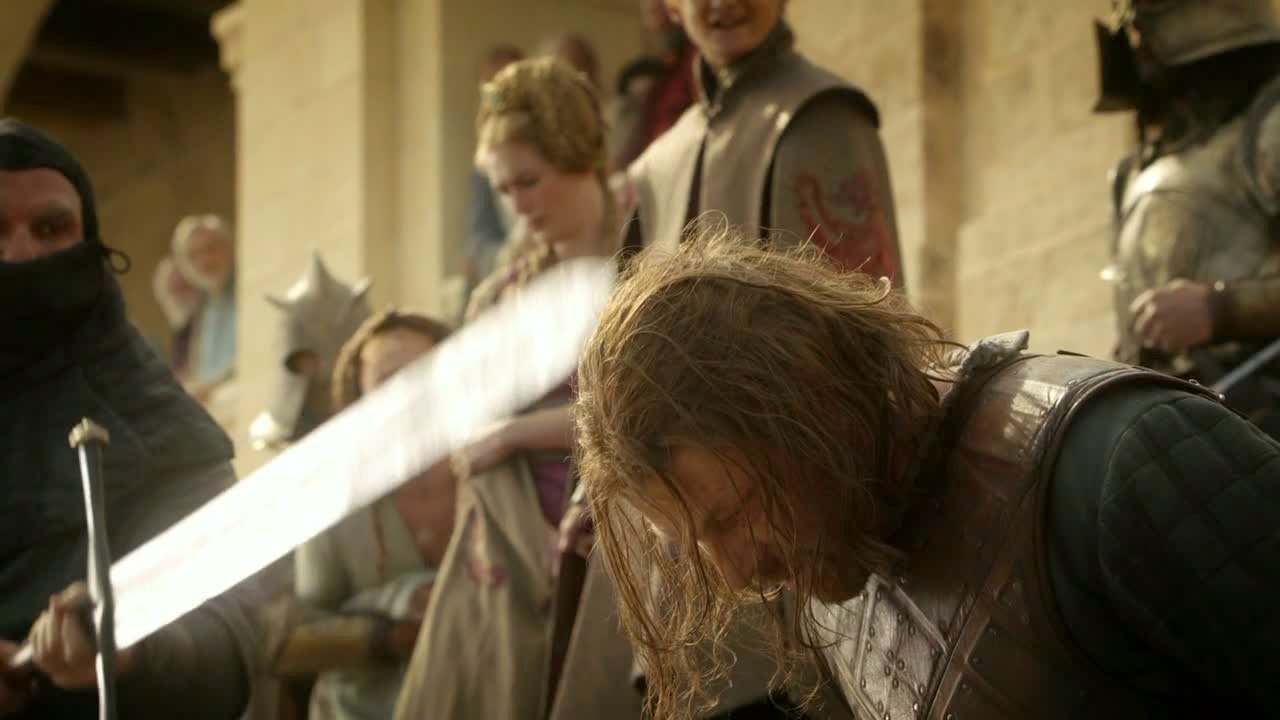
The Ned Stark

This student is a zealous advocate of open science, data sharing, pre-registration, systematic meta-analyses, data archiving, open access, and all forms of transparency in science. He is much admired by other students for these stances, even though they would never seek to emulate his puritanical approach. Unfortunately, this warts-and-all approach to writing papers leads to frequent rejections from major journals, which – curiously – only strengthens his resolve.


The Viserys Targaryen

The Viserys is the child of a famous Professor – and he never hesitates to remind everyone of it. He seems to think that his pedigree entitles him to success without much effort – and he is extremely annoyed by rejections from journals and, in fact, any form of criticism. Owing to his obnoxious sense of entitlement, this student could well be kicked out of the department if the Qualifying Exam or Defense committee are too irked by his attitude.

The Jon Snow

The Jon Snow’s current Professor agreed to supervise him at the request of the Chair of the Graduate Training Committee when the Snow’s former supervisor retired pre-maturely. His new supervisor accepted this role on condition that the Jon Snow would fund himself and not take up space or resources used by the other students. The Jon Snow is very hard working, serious (perhaps overly so), and dedicated. He turns out to be a good, if understated, student who will start his academic career at a tiny undergraduate college but ultimately will be recruited to an Endowed Chair at Harvard.

The Daenerys Targaryen

For the first part of her graduate degree, she shared an office with a Viserys and – as a result – suffered from a major case of the imposter syndrome. Once the Viserys was kicked out of graduate school, however, she quickly came into her own and, in fact, (re)discovered a new methodology (three of them, in fact) that have since made her one of the most influential and sought-after graduate students for collaboration. She seems destined for a position at a major research university, although she will face considerable challenges imposed by jealous competitors.


The Walder Frey

This student worked for a long time in the lab of a Professor who advised and funded all of the research. Then, just before submission of the paper, the Walder switched to the lab of a competitor, taking all of the data with him and dropping his original supervisor from all the papers.

The Tyrion Lannister

Supremely intelligent, the Tyrion sometimes seems to squander his abilities and talents in food, drink (lots of it), and various social activities. This joie de vivre is somewhat understandable as his previous supervisor was mean and condescending, never giving the Tyrion credit for any of his discoveries. With a more understanding and appreciative supervisor, however, the Tyrion will cut back on his socializing (if not his drinking) and generate extremely novel and inspiring ideas.

The Littlefinger

From day one (and probably well before that), this student has been relentlessly maneuvering everything and everyone in an effort to maximize his career advancement. He is uniquely effective at twisting any given collaboration in his favor, such that he now has a very good publication record. However, as time as gone on, his manipulative tendencies have become more widely known and he runs the risk of being blacklisted by the academic community. One foresees a rapid demise at some point in the not-too-distant future.


The Cersei Lannister

Deceptively clever, the Cersei is rising quickly within her field, collaborating with important people (although they don’t always seem the better off for it) and publishing many papers (although some say the work isn’t really hers). Rumor has it that much of her success comes from stealing the ideas of other students and undermining the success of her colleagues by providing withering confidential reviews of their papers and grant applications.

The Tywin Lannister

The Tywin has published many excellent papers and intends to keep doing so. He is smarter than most (perhaps all) of the people around him – and he knows it. He has a hard time concealing his contempt for others, even his supervisors. He will go far in academia – but no one will like him - and one day a former student of his could well cause his demise.

The Brienne (of Tarth)

Highly skilled and loyal (almost to a fault), the Brienne will do whatever her supervisor asks of her, quickly and efficiently, without any complaint whatsoever. It isn’t clear that she has the independence to run her own research program, but she is very good at improving the research of those around her. At the same time, her intensity and dedication to principles can sometimes off-put those around her.

The Brandon Stark

The Bran seems to think on another plane. This isn’t so much a book-smart type of intelligence but rather a more intuitive, gut-feeling approach to academics – or so it seems. When he asks questions in seminars, no one understands them – but it is nevertheless clear they are extremely insightful. He sometimes seems to know the outcome of an experiment even before it starts, and he has an amazing recall for the details of past scientific studies – even unpublished ones in which he wasn’t involved. He will only publish once – but it will likely win him the Nobel Prize.


The Jaime Lannister

When the Jaime was a senior graduate student, he blew the whistle on misconduct by his supervisor, who was then censured by the university and has disappeared from academia. Although some laud the Jaime’s action in this case, other supervisors have been reluctant to take him on for fear he will betray them too. As a result, he is a quite jaded and often makes acerbic comments about the whole process of graduate school. Deep down, however, he just wants to do good science – although he has some pretty weird relationships with other students.

The Robert Baratheon

You have never met a person who enjoys living quite so much as the Robert. He is the life of every party and this popularity has carried forward to many collaborations and supporters, generating some outstanding papers. It seems, however, that his hard-living ways might be getting the most of him and he could flame out soon.

The Arya Stark

The Arya was awarded a series of international fellowships and has been away from the lab for much of her degree. On her return, she is much more mature and experienced, having picked up a set of extremely rare and exceptional research skills, although it isn't clear she always uses them for the best purposes.


The Davos Seaworth

This student came from nowhere and, through simple hard work and dedication, has risen to a place of influence within his field. He has exceptionally good advice for other students in the lab and will – occasionally – directly disobey the wishes of his supervisor. Yet, whenever, he does so, it seems he made the right decision after all. He is extremely humble, almost annoying so, and would probably turn down an academic position on the excuse that he isn’t really worthy.

The Sandor Clegane

Another very capable student, he suffers one major flaw – he is terrified of snakes, even though his research is conducted in tropical environments abounding in them. Well, perhaps he suffers several other flaws, another one being his taciturn and blunt criticism of ideas he deems uninteresting and experimental designs he considers flawed. It seems clear that, deep down, he would really like to be a Professor and has the skills to do so; yet his difficult personality might preclude this.


Thursday, March 15, 2018

The 16 types of graduate supervisor – by JRR Tolkien


(Genders match the original.)

The Gandalf
Extremely wise – if sometimes inscrutably so – and able to solve your biggest problems, the Gandalf is often absent for long periods of time. And these can often be the most inconvenient times for him to be away. In his defense, these absences are often for extremely important meetings or to deal with problems in his collaborative network. Don’t count on the Gandalf for much day-to-day help with minor tasks but, catch him at the pub, and he will be fun and a fount of wisdom.

The Boromir
He is very good at solving your day-to-day problems, yet he does so reluctantly and seemingly without enjoyment. He is very skeptical of your ideas and will only let you pursue them when your committee guilts him into it. Often brooding, you get the impression that the Boromir might not like you. Indeed, he might be stealing your ideas and publishing them separately – although he will feel extremely guilty about it.

The Faramir
The Faramir had a famous PhD supervisor who is still active, and he has a bit of an inferiority complex about it. He is very sincere and helpful but often tries to adhere to the ways of his previous supervisor, even though they don’t really work that well for his own students. Fortunately, a well reasoned argument can usually shift the Faramir around to your way of thinking.

The Galadriel
The Galadriel is a giant in her research field and, if you are hard working and enthusiastic, she will provide you with tons of resources and moral support. She designs and constructs her own laboratory and field equipment, which is exceptional. However, she doesn’t travel much owing to a dependent husband, and so you are on your own in the field and at conferences. Also, very occasionally, she has this intense look that is very intimidating.


The Saruman
Long past the normal retirement date and having won the most prestigious prizes in his field, the Saruman is not satisfied and wants more fame. He will take a lot of graduate students but will ruthlessly use them to advance his own career and fame. He has a huge lab but will make you work long hours in poor conditions, and yet still try to make you feel like he is doing you a favor.

The Denethor
Nearing retirement, the Denethor is at a famous university but is perceived as one of the lesser lights there. He knows people think this of him but won’t accept it and so routinely lashes out at his students and denigrates them as a way of feeling better about himself. He has a huge lab with tons of money, but he is constantly afraid that the university is trying to take it away from him. Don’t expect much understanding from this type of supervisor.

The Eowyn
A brilliant scientist, she doesn’t get the recognition she deserves. Yet she forges ahead in her research, publishing excellent papers that, sadly, don’t tend to get accepted at the best journals. She is a bit jaded now and, while supportive, seems not to pay much close attention to your project. All her focus is on that elusive first paper in Science.

The Samwise Gamgee
Working at a small liberal arts college, the Gamgee is the ultimate micro-manager, always looking over your shoulder offering help and advice. He has a good understanding of basic lab and statistical procedures but doesn’t seem to have many truly original ideas. Yet the Gamgee is always there for you, offering what (little) funding he has and supporting you in your success and your failures. You sometimes get the feeling that he has come to think of your success as his crowning career achievement.

The Aragorn
Quiet and reserved, this supervisor is the ultimate skill-master. If you need to analyze your data, he can write the scripts. If you need to find that rare species, he is the only one who can do it. He doesn’t publish very much, but the few papers he does publish are very good – so good in fact that they could probably all be in Science. However, he really doesn’t want the hassle and so usually submits to much lower journals – unless encouraged (pestered almost) repeatedly by his colleagues to shoot higher. Unfortunately, the Aragorn doesn’t seem to enjoy his job very much and would probably rather be off somewhere hiking or climbing mountains.

The Pippen
Like the Gandalf, the Pippen is often absent but, unlike the Gandalf, not for work-related purposes. He is usually surfing or fishing or just hanging out somewhere. He sure is fun though, especially when hanging out with his prof buddy from down the hall. Great lab parties, with tons of food and drink and lots of laughter and activities, some scripted and some impromptu. He really wants to be your buddy is constantly trying to get you to smoke weed with him. Unfortunately, the Pippen doesn’t really have any skills to impart and essentially never publishes. Don’t choose this advisor if you hope for a career in academia.

The Radagast
This supervisor is extremely absent minded and really doesn’t pay much attention to you, yet it is hard not to be inspired by his sheer enthusiasm for the world around him. You will be his only student – and, much of the time, he won’t even realize it.

The Sauron
His lab is dark and dirty, and it smells bad all the time. He is in constant conflict with pretty much every other person in his field. You would think no one would be in his lab, but he is so powerful and influential that many flock to work with him – although they don’t seem to be very happy about it. When visiting during your recruitment, he won’t let you talk to his students (save this one really weird guy), nor will he meet with you except by Skype – with the video turned off.

The Elrond
This guy has been around for ages and knows EVERYBODY, often initiating huge collaborative projects. He can really hook you up with the best and brightest people, whose respect he commands. But, having done so, he has seemingly impossible expectations for your project. He is quite aloof and rarely travels but, just when your need is direst, he can show up unexpectedly with a critical influx of cash or equipment.

The Theoden
Early in his career, the Theoden had some very influential papers – but his fame and fortune have faded owing to vindictive competitors in his field. Fortunately, you could be just the person to rejuvenate his career if you have the patience and self-motivation. If you can shake him out of his lethargy, he will invest all his resources in you and plan to finish his career in a last blaze of glory, thus resuscitating his career and showing he wasn’t a one-hit wonder.

The Grima
This advisor has risen to a place of influence not because of any concrete scientific skills but rather because he has a knack for flattering the right people. He is a real creep and seems to have all sorts of unsavory designs on his students. He might even be faking the data in the few papers he has published, which – to everyone’s surprise – are sometimes in very good journals.

The Smaug
He has tons of money but is extremely stingy about it. He expects you to obtain your own funding for everything and then he takes most of it from you. No students have successfully graduated from his lab, yet his arrogance could be his downfall.


Stay tuned for – the 16 types of graduate student – by GRR Martin

The Null Hypothesis is Always Wrong

 No two populations are identical for any trait. No two communities have the same species composition. No detectable phenotype is ever compl...