Sunday, December 30, 2012

Indirect effects of parasites in invasions

Recent research emerging from the Global Invasions Network increases our understanding of the subtle but important role of parasites in invaded communities through density mediated and trait mediated indirect effects. The extent to which eco-evolutionary dynamics will shape the adaptive landscape of both native and invasive species in these communities as yet remains unknown.

One of the most dramatic and long-lasting effects of humans on the natural environment is the global spread of non-native species. As is well known, the astounding demographic success of non-native biological invaders has had dramatic effects on ecological communities and is considered a major driver of global losses of biodiversity, second only to degradation and destruction of habitat due to human development according to the International Union for the Conservation of Nature (IUCN). As biological invasions play a central role in the global environmental crisis, the global spread of species has significant consequences for contemporary ecological processes and can also fundamentally alter evolutionary trajectories, not only for native communities, but for the invaders themselves. Considering biological invasions under an eco-evolutionary framework is critical, as it can provide important insights providing a more complete understanding of the causes and consequences of biological invasions in this globalized ‘brave new world’ we’re heading toward that will have, effectively, a single continent: Neo-Pangea.

Recognizing the need to understand the ecological and evolutionary implications of biological invasions on a global scale, an international consortium of scientists convenes under the banner of the Global Invasions Network (GIN), a Research Coordination Network (RCN) funded by the NSF (PI’s: Ruth Hufbauer, Associate Professor at Colorado State and Mark Torchin, staff scientist at the Smithsonian Tropical Research Institute, in Panama). The 2011 GIN meeting in Panama City, Panama, generated some exciting new ideas about the effects of parasites in invasions. Over the past year, I’ve been involved in a working group that emerged out of this GIN meeting, chaired by Alison Dunn and Sarah Perkins, to consider various ways – some rather non-obvious – in which parasites can affect biological invasions.

Parasites are known to strongly influence the success of biological invasions across taxa, since parasite infection (or the absence thereof) can affect both native and invading species. The most obvious impact that parasites have on shaping the ecology and evolution of invaded systems is through direct effects on their hosts, but parasites also have widespread density and trait mediated indirect effects on other species, whether competitors, resources, consumers, or other parasites that interact with a given host that mediate the impact and success of invasion. These indirect effects include both density-mediated effects, resulting from decreases in host survival and reproduction, and trait-mediated indirect effects that result from changes in host life history traits, physiology and behavior. In a review recently published in Functional Ecology (Dunn et al. 2012), we considered the importance of these density- and trait-mediated indirect effects of parasites on the success of biological invasions, and discussed the extent to which these effects scale up to the community and ecosystem levels through the process of invasion. The extent to which parasites affect the eco-evolutionary dynamics of native and invasive species is as yet unknown, but provides exciting opportunities for empirical and theoretical research by identifying the mechanisms by which infectious processes shape the adaptive landscape in invaded systems and the traits that are likely under strong selection. Here I will draw on several examples in the review that illustrate how understanding the indirect indirections of parasites in invaded systems clearly generates natural experiments for evolutionary biology.

Parasites can affect competitive interactions between native and introduced species, which can facilitate the success of invasion by shifting the competitive balance in favor of the invasive species through density mediated indirect effects. For example, the invasive Pox virus, which is not highly virulent to the invasive grey squirrel (S. carolinensis), spills over from the grey squirrel to the native red squirrel (Sciurus vulgaris), which suffers high levels of mortality due to the virulent infection of this invasive pathogen. Theoretical models predict that parasites therefore increase the competitive replacement of red squirrels by the invader (Tompkins White & Boots 2003). Competitive interactions can also be affected by trait mediated indirect effects, affecting both the behavior and physiology of competing species that facilitates the success of invasion. The native ant, Solenopsis geminata) adopts a defensive behavior in the presence of a native phorid parasitoid, Pseudacton browni, that causes a very significant decline in their foraging rates. However, the behavior of the invasive ant, S. invicta, is less affected by the parasitoid, and can usurp available resources, increasing their competitive ability (Morrison 1999). Competitive interactions with invasive species can impose strong selection pressure on native species. Yet as these examples demonstrate, these competitive interactions are mediated by density mediated and trait mediated indirect effects of parasites. Using an eco-evolutionary approach to understand the consequences of these parasitic interactions can generate a framework for predicting how native communities will respond to the impacts of the parasite to mediate the selection strength of the competitive interaction with the invasive species.

Parasites can also increase the demographic success and ecological impact of an introduced species through trait mediated indirect effects on potential resources. For example, a native spionid polychaete (Polydora sp.) weakens the structural integrity of native whelks’ (Nucella lapillus) shells, which broadens the size range of individuals that can be preyed upon by the invasive green grab (Carcinus maenas). By amplifying the resource base of the invasive crab, polychaete infection thus increases both the ecological impact and success of the invasive crab (Fisher 2010). If predation by the invasive green crab imposes strong selection pressure on the whelk population, we can predict an evolutionary response for resistance to the polychaete, or the development of a thicker shell, in order to mediate the impact of infection which increases the ecological impact of the invasive predator. Examples from the plant literature also demonstrate that parasites of resources can increase the ecological impact of invasion through indirect effects on host physiology. For example, an invasive scale insect, Cryptococcus fagisuga, attacks the native American beech Fagus grandifolia, causing mechanical damage to the tree that facilitates infection by an emerging fungal pathogen, causing significant populating declines in the beech across the United States (Kenis et al. 2009). In a similar manner, the invasive bark beetle, scolytus multistriatus, burrows into the elm tree, Ulmus americana, transporting the invasive fungi, Ophiostoma ulm & O. novo-ulmi, which cause Dutch elm disease. This pathogen has caused significant losses (>50%) to elm trees in North America, changing both the community composition and structure of elm forests in North America. By imposing strong selection pressures on elm populations, the bark beetle and the fungal pathogen have the potential to induce an evolutionary response from the elm to resist the impact of either the beetle or the fungus.

Parasites can impose strong selection pressures on affected species, stronger yet if parasites increase the success and impact of invasive species. Ultimately, we need to integrate eco-evolutionary dynamics into investigations of invaded communities to generate a predictive framework of the causes and consequences of biological invasions. Recent investigations elucidate both the direct and indirect effects of parasites in mediating the impacts of invasion. By identifying the underlying processes by which parasites affect the process of invasion through density and trait mediated indirect effects, we may identify traits that are under strong selection, are likely to generate an eco-evolutionary response, and ultimately shape the adaptive landscape in invaded communities.

Dunn, Alison M.; Torchin, Mark E.; Hatcher, Melanie J.; Kotanen, Peter M.; Blumenthal, Dana M.; Byers, James E.; Coon, Courtney A. C.; Frankel, Victor M.; Holt, Robert D.; Hufbauer, Ruth A.; Kanarek, Andrew R.; Schierenbeck, Kristina A.; Wolfe, Lorne M.; Perkins, Sarah E.. 2012. Invasions and Infections: Indirect effects of parasites in invasions. Functional Ecology. http://onlinelibrary.wiley.com/doi/10.1111/j.1365-2435.2012.02041.x/full

Monday, December 3, 2012

Niche theory and speciation

In 2011, I attend a meeting on "Niche Theory and Speciation" in Hungary. The first volume of the special issue resulting from that meeting has just been published in Evolutionary Ecology Research. This first volume includes eight empirical papers plus an introduction, from which I now quote:

"This special collection, which is split between the May and July issues, originated from the workshop ‘Niche Theory and Speciation’ (http://nichews.elte.hu). The meeting took place at Keszthely (Lake Balaton) in Hungary in August 2011, and was organized by Géza Meszéna, Åke Brännström, Ulf Dieckmann, Gabriella Magyar, Liz Pásztor, and András Szilágyi. Funding was provided by the European Science Foundation in the framework of the Research Networking Programme ‘Frontiers of Speciation Research’, and also by the International Institute for Applied Systems Analysis (Laxenburg, Austria)."

"As editors, our goal was to attract the best possible set of papers. We therefore expressly left it open to authors to decide the papers they wished to contribute. Some of the papers are written summaries of work presented at the 2011 meeting, whereas others grew out of discussions during and after the event. We also solicited some additional papers from investigators who had been invited to the original meeting but who were unable to attend. We also strove for a lively mix of empirical and theoretical papers given that progress in the field will undoubtedly require effort from both sides. In the end, all papers emphasized the connection between ecology and evolution, but these links emerged naturally rather than being forced by the editors."


And here are the papers with links to the online versions:


Géza Meszéna & Andrew P. Hendry. 2012. Introduction to Niche Theory and Speciation. 14:361-363.

Luis Fernando De León, Gregor Rolshausen, Eldredge Bermingham, Jeffrey Podos & Andrew P. Hendry. 2012. Individual specialization and the seeds of adaptive radiation in Darwin's finches. 14:365-380.

Jay J. Falk, Christine E. Parent, Deepa Agashe & Daniel I. Bolnick. 2012. Drift and selection entwined: asymmetric reproductive isolation in an experimental niche shift. 14:403-423.


Andrew D. Foote. 2012. Investigating ecological speciation in non-model organisms: a case study of killer whale ecotypes. 14:447:465.


Travis Ingram, Alan G. Hudson, Pascal Vonlanthen & Ole Seehausen. 2012. Does water depth or diet divergence predict progress toward ecological speciation in whitefish radiations? 14:487-502.


I. S. Magalhaes, B. Lundsgaard-Hansen, S. Mwaiko & Ole Seehausen. 2012. Evolutionary divergence in replicate pairs of ecotypes of Lake Victoria cichlid fish. 14:381-401.

Patrik Nosil & Paul Hohenlohe. 2012. Dimensionality of sexual isolation during reinforcement and ecological speciation in Timema cristinae stick insects. 14:467-485. 


Yuval Sapir & Rupert Mazzucco. 2012. Post-zygotic reproductive isolation among populations of Iris atropurpurea: the effect of spatial distance among crosses and the role of inbreeding and outbreeding depression in determining niche width. 14:425-445.


Jorge Soberón & David Martínez-Gordillo. 2012. Occupation of environmental and morphological space: climatic niche and skull shape in Neotoma woodrats. 14:503-517.


Sunday, December 2, 2012

Carnival of Evolution #54

Carnival of Evolution #54 is now up!  We don't have a post in this carnival, since we were so demoralized and outraged by our unjust but crushing defeat in the Halloween pumpkin-carving contest that we apparently couldn't write any further blog posts last month.  But nevertheless, #54 is an awesome carnival, with posts ranging from malaria to slime molds, eusociality to eukaryotes, pleiotropy to pedigrees.  A wild ride, as always.

The carnival theme this month is "A Walkabout Mount Improbable", which makes me think of adaptive walks on fitness landscapes.  So I'll leave you with this picture, ostensibly of a fitness landscape, and a question: do real fitness landscapes look like this?


Tuesday, November 6, 2012

Trick or Retreat

Trick or Retreat
-the Hendry Lab Halloween escape-


Uprooted from its Celtic origins of celebrating the harvest and the end of the growth season, Halloween has evolved over the centuries. For some folks, Halloween nowadays seems to be all about porches filled to the brim with rubber arthropods and absorbent wadding tangled up in fences to signal free sugar to young parents. Well-organized costume contests attract wallflowers and daredevils of all ages alike to thrive in flamboyant displays of recent horror movie themes or social media excrescences. Hours and hours are spent on carving exercises that leave behind disfigured pumpkins waiting in vain for the ghosts they were originally intended to scare away. Modern Halloween has become dominated by ominous competitions. Competitions for neighborhood reputation, party attention, and candy bars… Everybody scurries around between dollar stores and front yards to accomplish as much gory decoration as possible before the turmoil begins. Everybody? Well, not everybody. The Hendry Lab, a small group of indomitable bon vivants, decided to take it easy this year.

Over the hills and far away from all the scars and skulls of the big city, there lies a small wooden cabin northeast of Montreal. It's there the Hendry Lab tends to retreat. Busy with bonfires and hikes, they quickly forgot about all the fuzz in the city and had a great time.

The tin ghost of competition, however, had followed them up into the woods and into the cabin where it manifested in the 'Obscure Booze Festival', a boozy ballot to nominate the most obscure alcoholic beverage of the weekend.

Subset of our sample collection with some dude in the background
And thus, while the Ricciardi Lab grimly sharpened their carving tools and made plans filled with bitterness to showboat around at the yearly McGill pumpkin carving contest, the Hendry Lab explored the unsung liquors of the world. For the sake of completeness, we here report the outcomes in an ordination biplot based on people’s votes for the respective categories.
Ordination plot of the Hendry Liquor Space with category vectors overlain in red; click to enlarge
As the third day dawned over the cabin in the woods, the Hendry Lab - refreshed and brisk - set course for the big city again. Word on the street had it that old Stewart was gathering his faithful from the three wings (and the Redpath Museum) to his yearly fruit-slashing contest in order to anoint the most obedient lab of them all. Such a foreseeable circus never really appealed to the denizens of the Hendry Lab. Previous years had left them without accolade, and it wouldn't be different this year; genius is rarely recognized in its own time. What would be different this year, however, was the mark their work would leave on the souls of bystanders and judges alike – this year’s take-home message would be too scary to take home...

And so the carving began. At one extreme, the Ricciardis with their Bodum® carving set and their neatly assembled 'animaux plastique' – on the other extreme, smelling of guppies and stickleback, the Hendrys, prepared to give everything to restore Halloween’s original meaning and scare away the pagan ghosts. Well, the rest is (micro-)history. Of course, the docile Ricciardis outnumbered and displaced the ardent Hendrys and took the lead with a 'pumpkin arrangement' that might be best described as 'the potpourii of triviality'. Made from polished action figures, sponges, and cheap sparkling bogus, they presented a front-yard altar upon which creativity was laid to rest with much ado.

This kind of 'forced perspective architecture' has already been invented by bower Birds. Nice try, Ricciardis...
The Hendrys were not amused – but also they were not really paying attention. Their mission was to dispel the ghosts of the past, to save the harvest, to drive away the dark clouds that ever gather above their precious liquor cabinet. And they knew that they had to break the rules for this: Over the past centuries whenever harvest season was coming up, people have made straitlaced use of their Cucurbitas and mostly carved rectangular inlets into the fruit. No wonder harvest ghosts aren't scared anymore!

The Hendry Lab changed all that. By deconstructing their pumpkin into elementary pumpkin-subsets and reassembling it inside-out they re-invented fear as we know it – the evil, treacly menace that forces us to question the very foundations of our existence. It is inherent to these existential foundations that we engage in a constant struggle to harmonize our inner- and outer-world relationships, to somehow achieve peace of mind. But what if inside and outside were no longer where they used to be? What if things from deep down inside us would crowd out our shiny, phony façades, pullulating in the pyic cracks of our tanned skins? Behold a glimpse into these dark times that hopefully will never rise.

Take this, harvest ghosts!

Note how the dauntless Hendry himself dares to go eye level with the daemon
We might have gone astray when it comes to old Stewart’s decoration ceremony but at least our pumpkin was actually scary, unlike some we could mention. Also, besides the all-encompassing conspiracy against us, the judges were bribed. Goodnight.

This picture shows a visiting Bridge Club from Ontario who got picked up lost on Docteur Penfield & Peel

Thursday, November 1, 2012

Carnival of Evolution #53

Carnival of Evolution #53 is up!  As Max Headroom would say, ch-ch... ch-ch-ch-check it out.  (Yes, I have just dated myself.  :->)

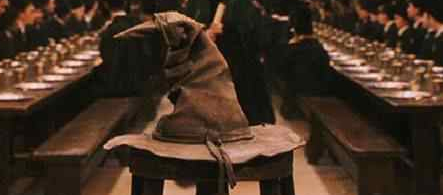
The theme seems to be sorting.  Luckily, there's a hat that's well-adapted to that niche!


What journal does this paper belong in?  Hmm, it's about snakes...
so perhapsssss... The Journal of Herpetology?  No?  Are you sure?
Their editors are very powerful... they could help you get published...

Wednesday, October 17, 2012

Guppies, predators, and parasites

As many people who follow the blog know, there is a lot of work being done on Trinidadian guppies. Just in case you don't know about guppies, a quick overview. Guppies are native to Venezuela and Trinidad, and in the northern mountain range of Trinidad, it so happens that there is a lovely playground for evolutionary biologists. Starting with Ben Seegher's PhD thesis and continued by very cool scientists like John Endler, David Reznick, Helen Rodd, and Anne Magurran, the guppy became a model system for rapid adaptation. Guppies in low predation areas are more colourful and differ in life history and behavioural traits, among many other things, as compared to guppies that co-habit with dangerous predators. For the purposes of our paper, we focus on male colour, a well known adaptive trait in the guppy.

Pretty guppies.
Photo by Paul Bentzen

The spatial variation in predator composition means guppies have to adapt to their environment to be able to reproduce, and thus, a lot of work has focused on the effects of predation or surveyed differences among populations in relation to the predation level. However, we know life for guppies is very complicated, and that there are other selective pressures acting on them, including parasitism. If we think of adaptation beyond a single causal force, what happens? Will it alter our perceptions of the original causal force? Will the causes interact? Could it be a stronger force than the original one? To address these questions of uni- vs. multi-factorial causes of variation in phenotype, we looked at the effects of both predation and parasitism on male guppy colour.

A pike cichlid, one of the predators
Photo by Kiyoko Gotanda

While there are many ways to consider the effects of parasitism, we chose to focus on the ectoparasite Gyrodactylus spp because previous work has shown that Gyros (as we affectionately call them) can affect a number of traits that also differ between high predation (HP) populations and low predation (LP) populations. The parasite is transferred through fish contact, and we also know that parasitism levels vary considerably in natural populations. We can see Gyros through a stereo-microscope, which means we can assess parasitism levels in the field.

Based on previous work, we know Gyros can impose selection by affecting survival, growth rate, and reproductive success. We also know Gyros can have an effect on behaviour, body size, and colouration, so it is not unreasonable for one to think parasitism can impose selection on phenotypic traits. However, relatively few of these studies are field studies, so we seek to fill that lack of information by building on previous field-surveys.

A Gyro
Photo by Joanne Cable

Specifically, the question we sought to answer was "whether or not parasitism by Gyrodactylus leaves a signature on guppy phenotypes in nature," and by phenotypes, we mean things like male colour. As stated above, we know predation is an important selective agent driving guppy colour where HP fish have less colour than LP fish. Based on previous work, we would expect parasitism to have a negative effect on guppy colour. High rates of parasitism would be expected to lead to lower levels of colour. Thus, if we jointly consider predation and parasitism, is parasitism as important in driving colour differences as predation? Can parasitism modify our perceptions of the effect of predation on guppy colour? To determine this, we surveyed 26 natural populations of guppies in Trinidad. As cool as the science was, I think everyone enjoyed the break from Canadian winters the most... We sample with butterfly nets. How cool is that?

Here guppy, guppy, guppy
Photo by Kiyoko Gotanda

If you want to know our methods, you can check us out online for the details. It involves equipment, chemicals, a digital camera, and a lot of audiobooks. Or you can ask in the comments or email me. I won't bite. I promise.

So what did we find? Well, first, we found that when we sample around the same time in two subsequent years, the parasitism levels are pretty consistent, that parasitism levels among populations varied quite a bit, and that parasitism levels were generally higher in HP sites than in LP sites.  This is consistent with previous surveys, and we speculate this could be because (1) flooding might sweep infected fish downstream from LP to HP populations, (2) HP guppies like to shoal more than LP guppies, possibly increasing transmission, (3) susceptibility might be higher in HP populations, and (4) HP sites might differ ecologically in ways conducive to parasite infection.


But what about colour? Did parasitism have an effect on male guppy colour? Well, interestingly, it appeared not to. Lab studies have shown an effect of parasitism on guppy colour, but we didn't find any direct effects of parasitism on male colour. In fact, a previous field survey didn't find an association with orange colour and parasitism either. So what gives? We have a couple of ideas on why things might be detected in the lab, but not in nature. First, our field survey was a snapshot survey, so we don't know a given guppy's infection history or what the population parasitism levels were like before or after the survey. We know that Gyro epidemics increase and decrease quite rapidly, so it's possible our measures of parasitism are not a true representation of parasitism levels. Second, lab studies can control for a lot of things such as light and resources. We can't control nature, so there might be variation in other selective agents that prevented us from detecting a parasite signature on colour patterning. Third, mortality of infected or uninfected fish can differ, potentially altering parasite and colour distributions.

So we didn't find a significant effect of parasitism on guppy colour. But what if we throw predation back into the story? Does parasitism modify our conclusions about the effect of predation on colour? When considering predation, our results were congruent with what we expected a priori: males in LP sites had more colour than HP sites in general. But we had a lot of variation. It wasn't a clear cut story. Some HP sites had more colour than some LP sites. Previous work has also found similar differences and nuances, and from this, we can conclude that predation IS an important selective agent on guppies, but it's a lot more complicated than just predation alone.

We now ask "does the predation regime story benefit from a simultaneous consideration of parasitism?" Well, we didn't find an effect of parasitism on colour, and adding a parasitism term to our models almost never affected our conclusion about the effect of predation. We still must consider the potential drawbacks of field surveys, but based on our data, we find that parasitism does not modify our interpretation of the effects of predation.However, we are not saying parasitism has no effect, but rather that the signature of an effect of parasitism on male guppy colour might be swamped by other selective agents (e.g. predation) leaving us unable to detect a significant effect of parasitism on colour.

So, in a nutshell, we found that parasites vary between populations and were relatively consistent when assessed over two years, higher infection levels are often found at HP sites as compared to LP sites, parasitism doesn't appear to have an effect on male guppy colour, and considering parasites does not alter our current conclusions about predation.

That's all she wrote!

Pretty snake
photo by Kiyoko Gotanda

Reference:  Gotanda K.M., Delaire L.C., Raeymaekers J.A.M., Pérez-Jvostov F., Dargent F., Bentzen P., Scott M.E., Fussmann G.F. & Hendry A.P. (2013). Adding parasites to the guppy-predation story: insights from field surveys. Oecologia.172(1): 155-166. DOI: 10.1007/s00442-012-2485-7

Friday, October 5, 2012

Indirect Genetic Effects and Eco-Evo Feedbacks


I’ve enjoyed reading through some of the recent entries of this blog and I’m very happy to be invited to contribute. I hope that the ideas of using indirect genetic effects as part of research into eco-evo feedbacks will be interesting.

In a new paper, out in Ecology Letters, we examined how genotype by genotype (G x G) interactions affected plant productivity and pollinator visitation.  We used three genotypes each of Solidago altissima and Solidago gigantea, planted together in monocultures and all interspecific combinations. After two years of growth in large, outdoor pots, we examined pollinator visitation rates and destructively sampled the plants to obtain biomass measurements for flowers, stems and leaves, rhizomes, and coarse roots. We found that neighbor plants exerted particularly strong influences on the belowground phenotype of focal plants. The presence of strong, genetically-based, belowground interactions among neighboring plants makes sense given the expectation of resource, rather than light, limitation. The neighbor genotype effects described above can be considered indirect genetic effects (IGEs), which are influences on the phenotype of a focal individual due to the expression of genes in an interacting individual. To be precise with terminology, we’d call the IGEs in our study interspecific indirect genetic effects (IIGEs), because the interacting individuals were members of different species. 

Earlier I mentioned that we also measured pollinator visitation. We found that genotype by genotype (G x G) interactions influenced how many pollinators visited focal plants. Although we don’t know the mechanism for sure, it may be that synchronicity (or the lack thereof) in flowering times between neighboring genotypes influenced pollinator visitation. Because we didn’t detect G x G interactions for any biomass traits, it’s likely that the mechanism goes beyond variation in productivity due intransitive competitive relationships between interacting genotypes. Whatever the mechanism, G x G interactions are a fundamental unit of the coevolutionary process, suggesting that it is possible that, over many generations, we could observe coevolutionary interactions between genotypes driving changes in the composition of associated communities.

IGEs show that evolutionary forces acting on an individual’s phenotype can come from multiple sources – changes in that individual’s genotype or changes in the genotypes of interacting individuals. Additionally, models approaches have suggested that evolution can occur much faster when phenotypes interact (see Moore et al. 1997). So, in line with this blog’s recent “Kumbaya” spirit, I’d suggest that IGEs and IIGEs could be an important concept that can help unite community genetics, niche construction, ecological genetics, and so on. Perhaps IIGEs could be the arrow that connects “communities” and “phenotypes”, or they could result in changes to a focal plant’s phenotype that affects its interactions with other species. Either way, in my view eco-evo feedbacks are complex and applying names and definitions to the interactions which make up the feedback helps to simplify the issue.

The Null Hypothesis is Always Wrong

 No two populations are identical for any trait. No two communities have the same species composition. No detectable phenotype is ever compl...